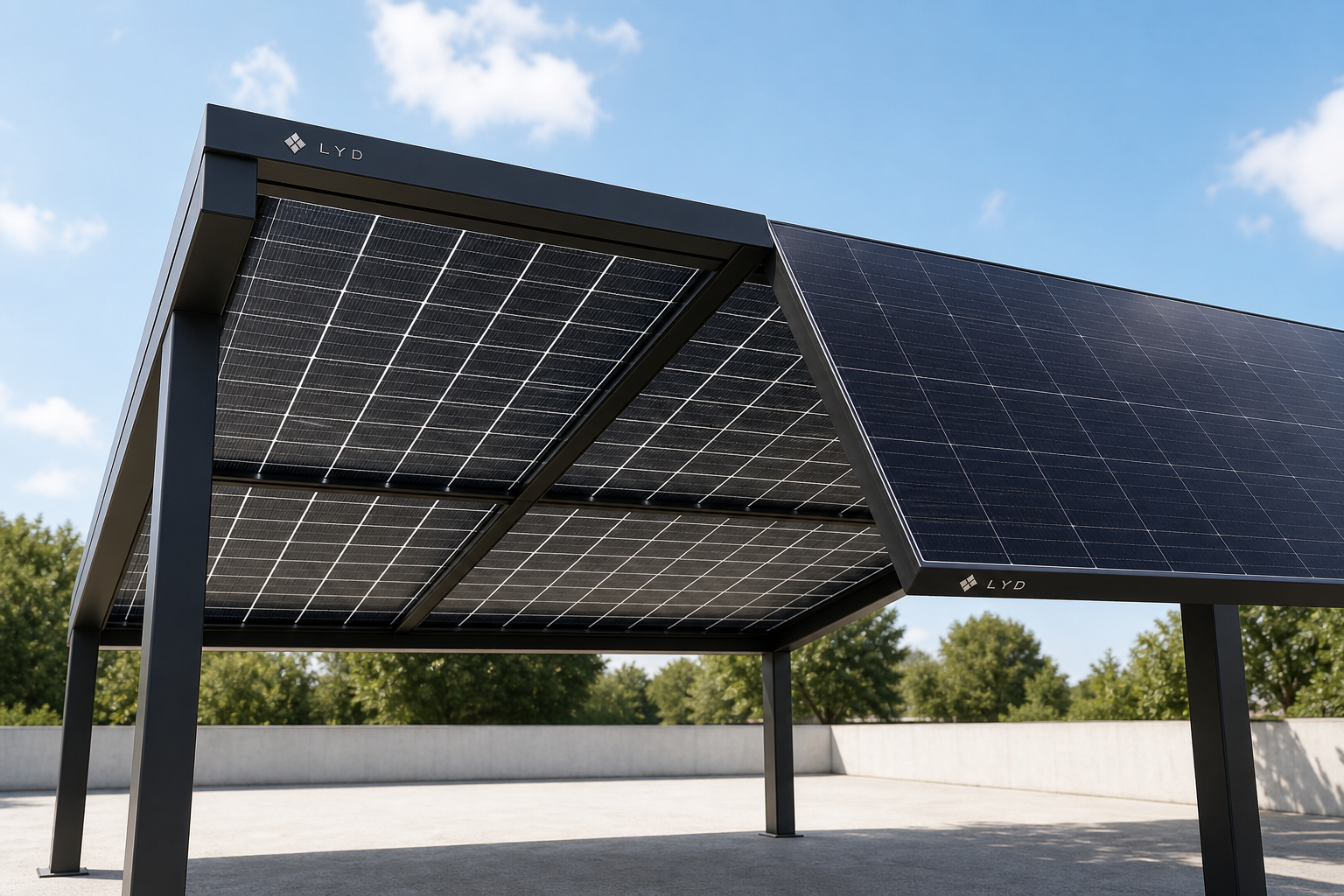
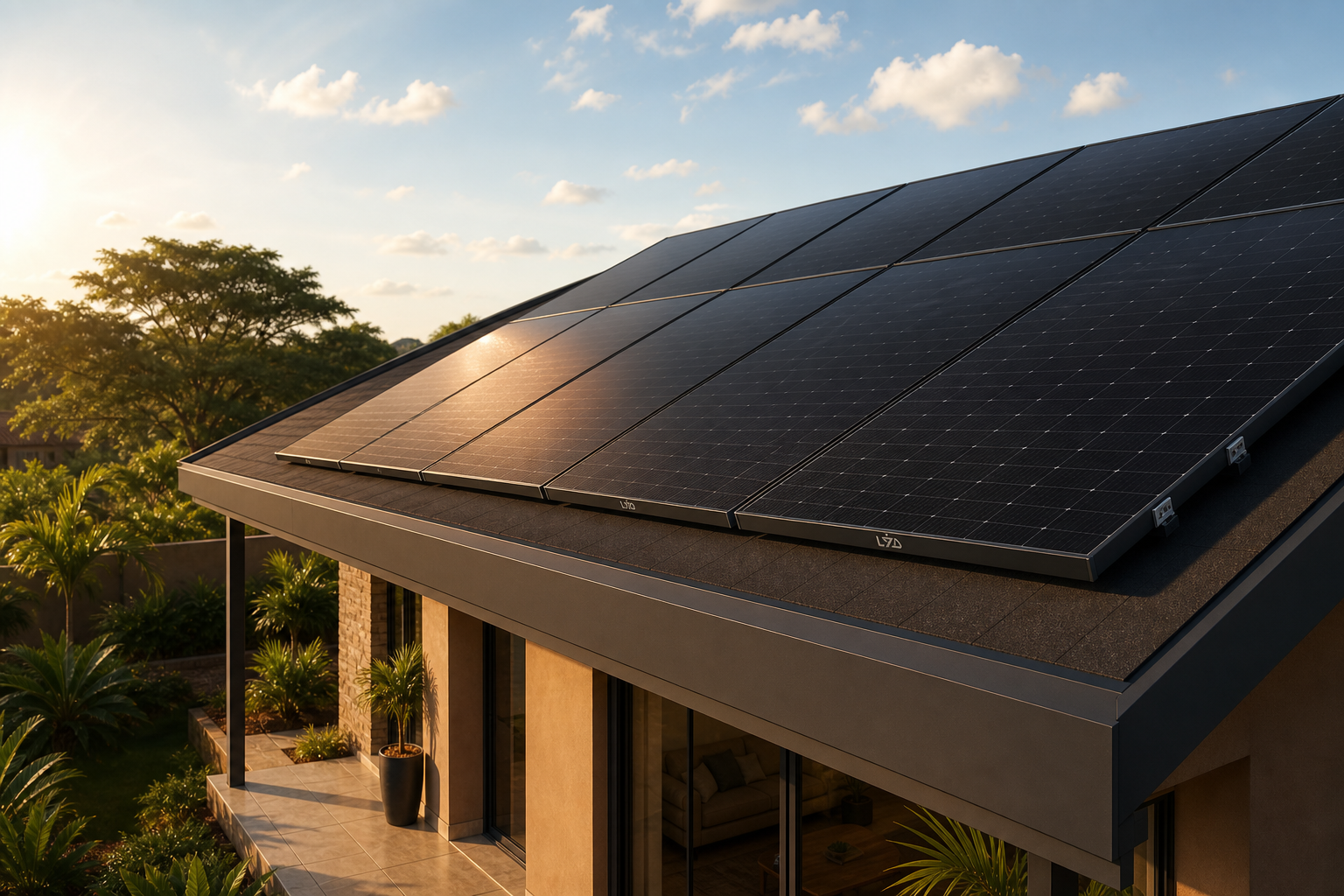
LYD Photon HJT solar panels installed on a modern African residential rooftop under a bright sky

The Solar Line

Photon

Next-generation heterojunction solar panels. More sunlight captured, less energy lost to heat, longer working life — built for African rooftops, ready for every roof everywhere.

400 – 720 W

Per-module power

Up to 26.9%

HJT efficiency

30 years

Linear warranty

The lineup

Four panels. Every roof.

From the 400 W Photon that lines a residential roof to the 720 W flagship that anchors a utility-scale array. All four share the same heterojunction silicon, the same bifacial back glass, and the same 30-year linear power warranty. The difference is footprint and watts per module.

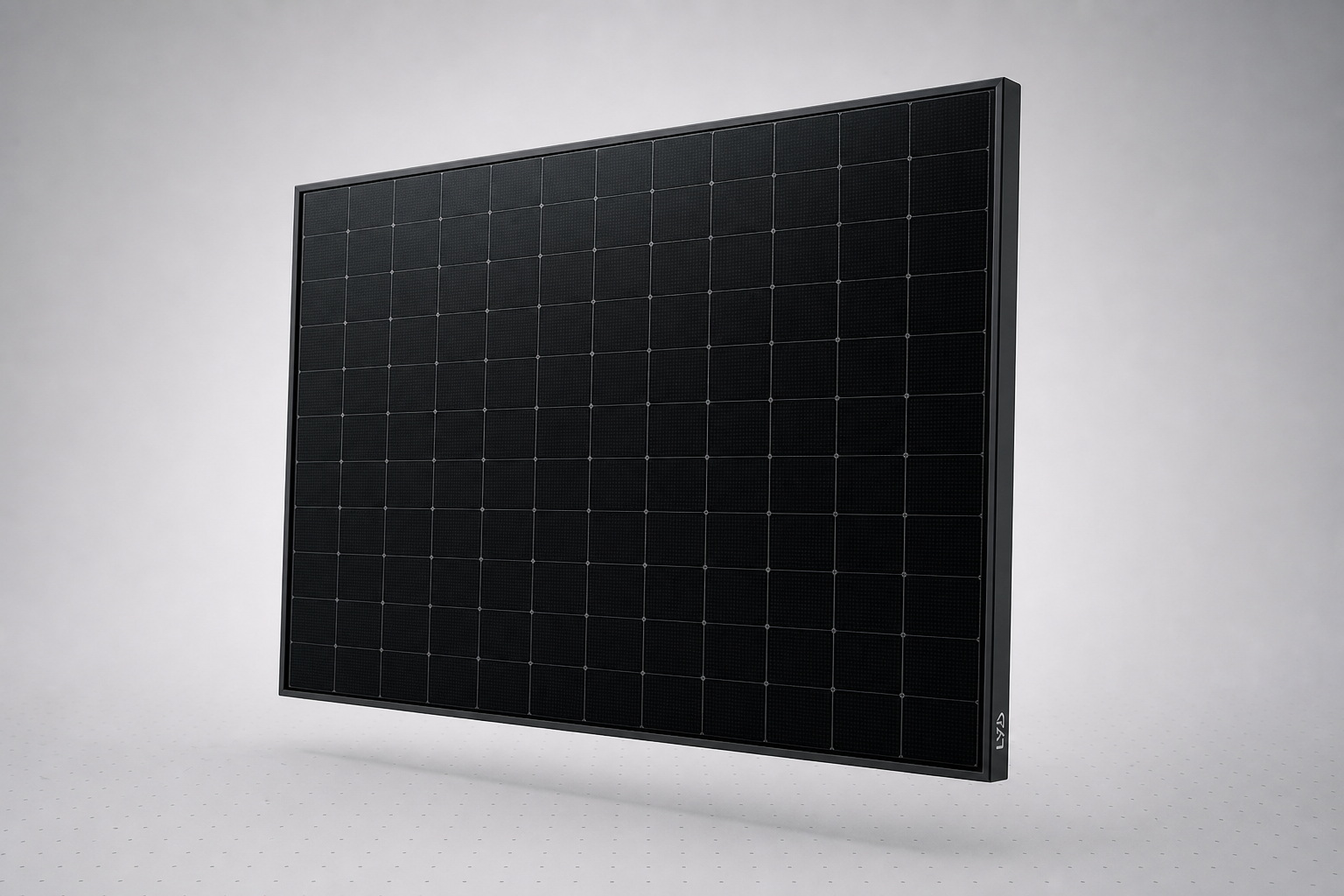
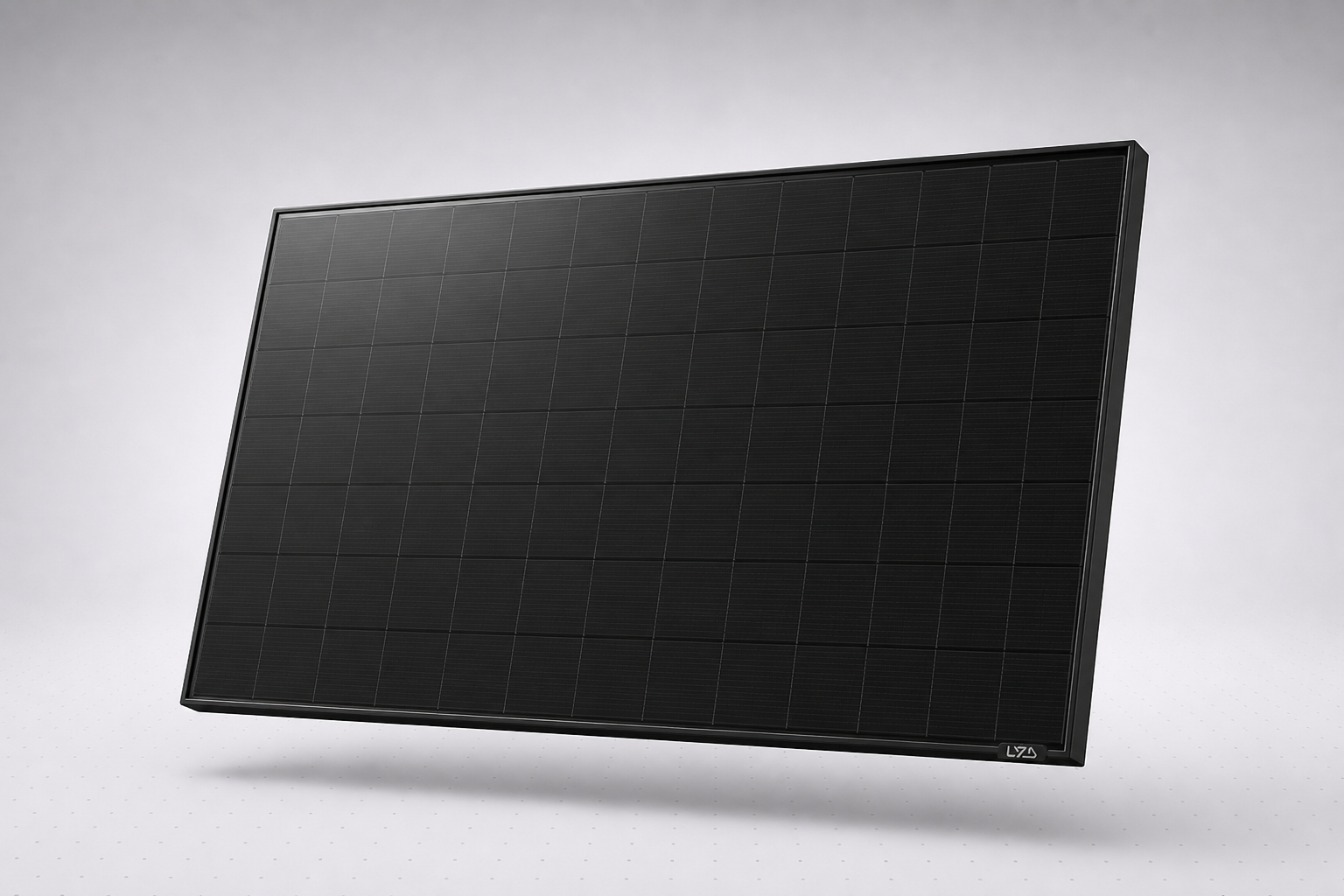
LYD Photon 400 — 400 W bifacial HJT residential solar panel with black anodised frame
Most popular
400W
Residential

Photon 400

The next-generation HJT panel for the modern home.

400 W

Nameplate power

26.9%

Module efficiency

Ideal for

Residential rooftops, small commercial — most homes need 8 to 16 of these.

The flagship residential Photon. 108 half-cut HJT cells laid into a compact format that fits standard roof rafters and the smallest Orbit One installations. At 26.9 % module efficiency it produces meaningfully more energy per square metre than any PERC panel on the market — and it carries on producing in the heat, where most panels start to fade.

  • 26.9 % module efficiency
  • 108 half-cut HJT cells
  • Bifacial, 30-year linear warranty
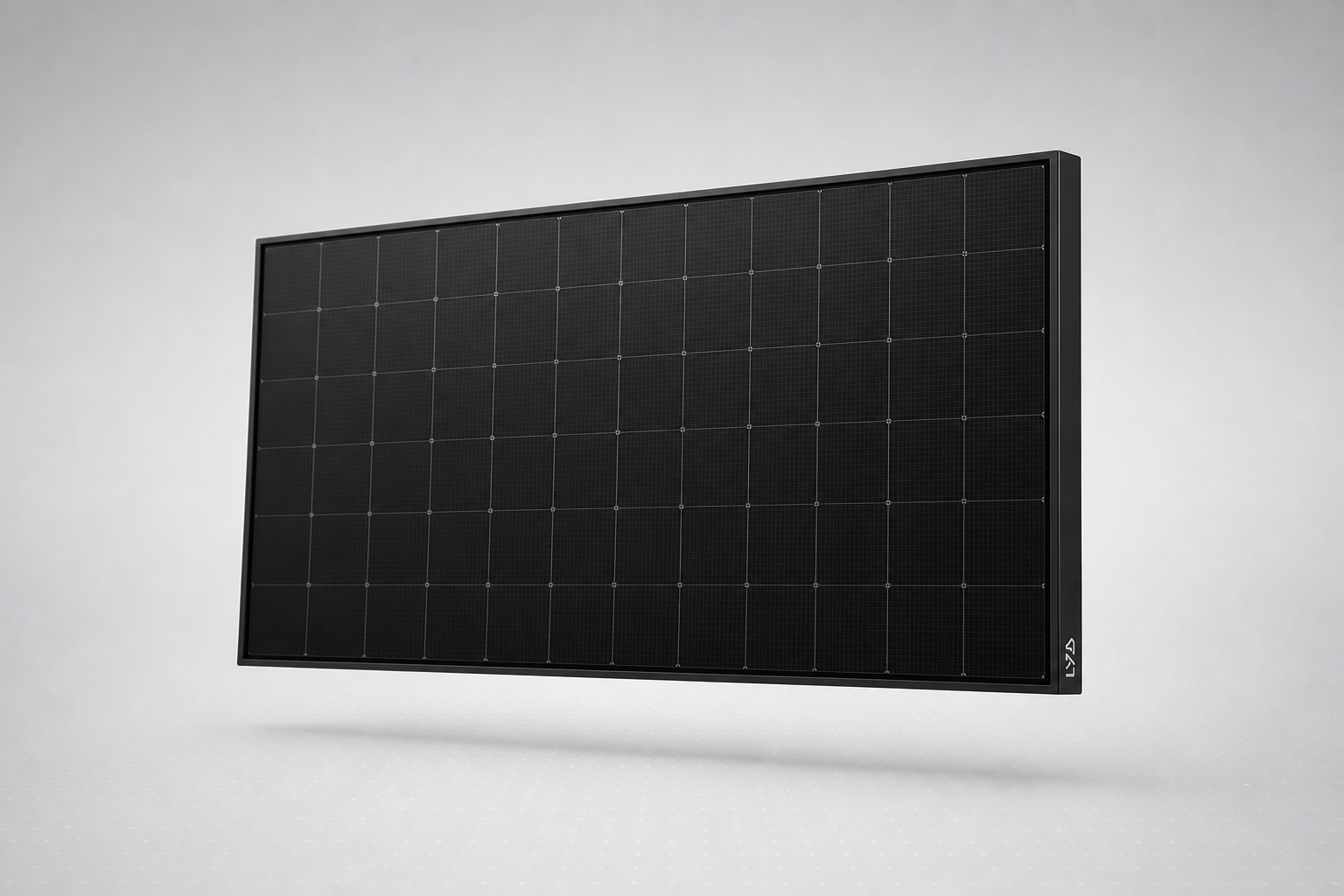
LYD Photon 595 — 595 W bifacial HJT commercial solar panel
595W
Light Commercial

Photon 595

More watts per module. Fewer modules per roof.

595 W

Nameplate power

25.4%

Module efficiency

Ideal for

Large homes, light commercial rooftops, agri-solar — fewer modules per kW.

Photon 595 steps up to a 132-cell format with M10 HJT cells. The result: nearly 50 % more power per module than Photon 400, which means fewer mounting points, fewer connectors, and a shorter install — particularly valuable on commercial roofs where balance-of-system cost dominates.

  • 25.4 % module efficiency
  • 132 half-cut M10 HJT cells
  • Lower BoS cost per kW installed
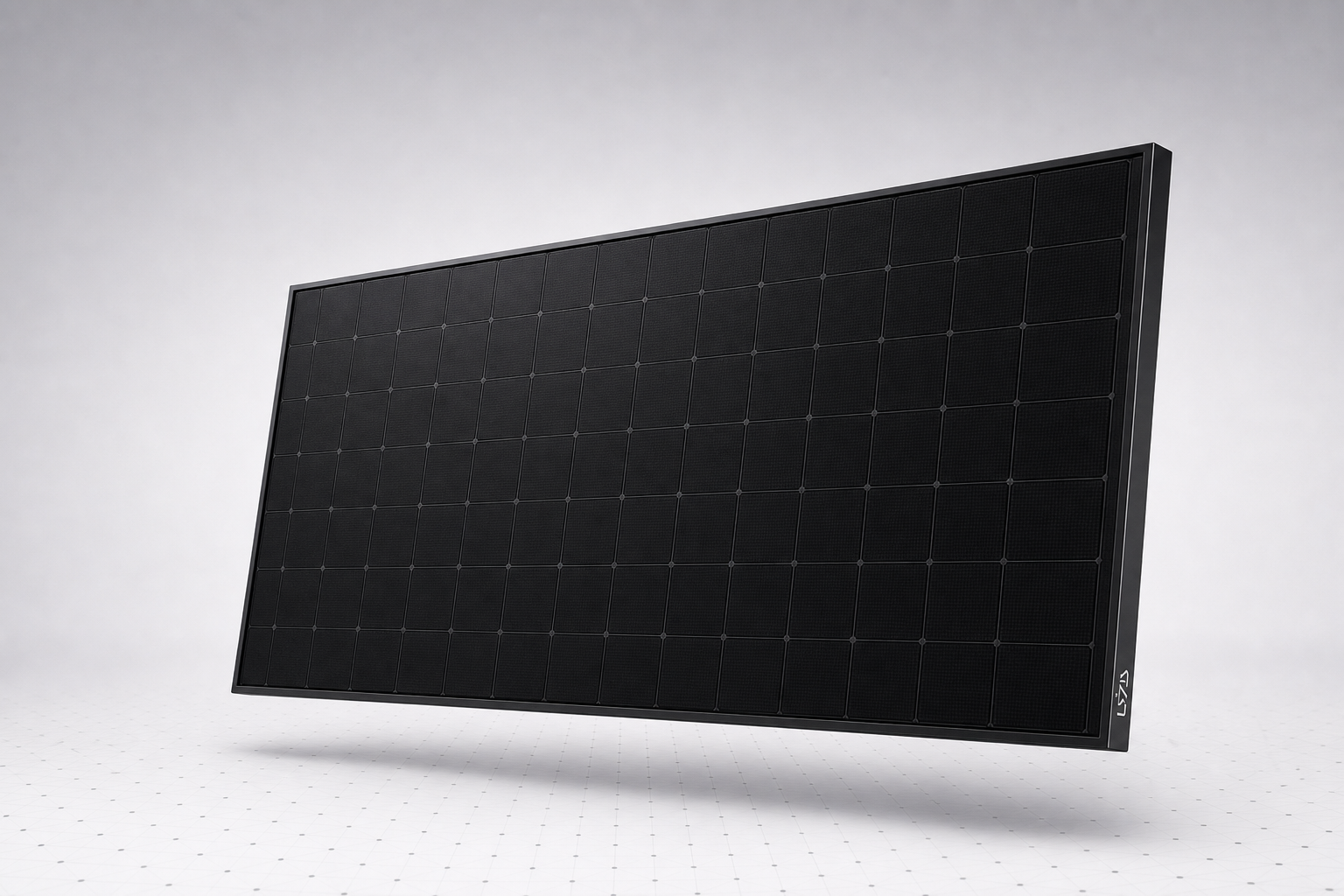
LYD Photon 650 — 650 W bifacial HJT commercial solar panel
650W
Commercial

Photon 650

The commercial workhorse, HJT-honest.

650 W

Nameplate power

24.8%

Module efficiency

Ideal for

Commercial rooftops, ground-mount arrays, agri-PV — the commercial workhorse.

Photon 650 sits at the sweet spot for commercial installs: large enough to make a real dent in BoS cost, small enough to handle by a two-person install crew. 132 large-format G12-R cells, full bifacial back glass, and the same temperature coefficient that lets every Photon shrug off the Nigerian midday sun.

  • 24.8 % module efficiency
  • 132 half-cut G12-R HJT cells
  • Two-person install footprint
LYD Photon 720 — 720 W bifacial HJT utility-scale solar panel
Flagship
720W
Utility

Photon 720

Utility-scale watts, residential silicon discipline.

720 W

Nameplate power

24.3%

Module efficiency

Ideal for

Utility-scale arrays, microgrids, Hyperpack-paired sites — biggest watts per panel.

Photon 720 is the flagship — 144 half-cut G12 HJT cells inside the largest module LYD ships. Built for utility-scale arrays, microgrid deployments, and any site big enough to be paired with a SafeCell Hyperpack. Still bifacial, still HJT, still the same temperature behaviour as the residential Photon — just more of everything.

  • 24.3 % module efficiency
  • 144 half-cut G12 HJT cells
  • Utility-grade frame & sealing

Heterojunction technology

Next-generation silicon, layer by layer.

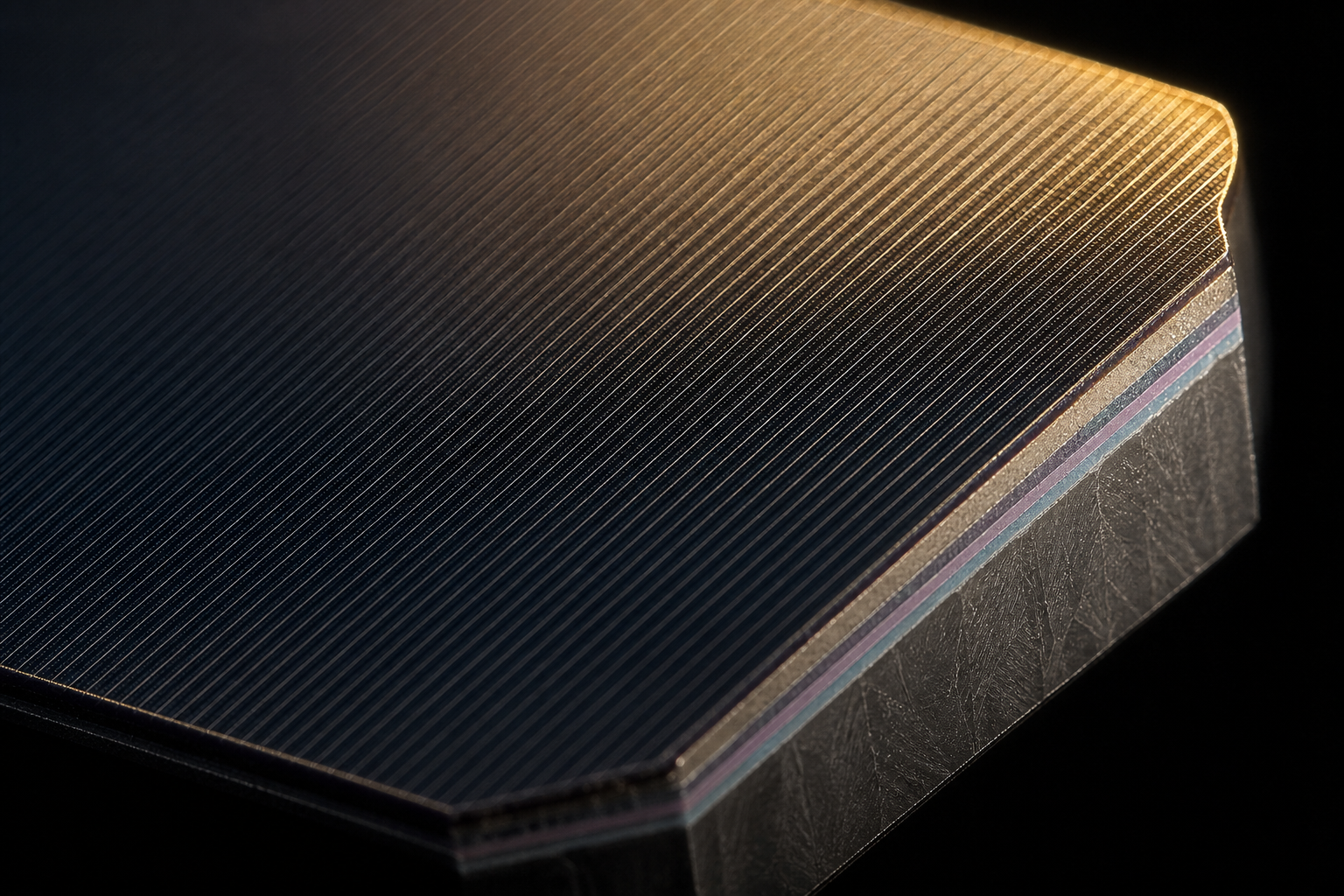
HJT — heterojunction — is a hybrid cell. A monocrystalline silicon wafer at the core, sandwiched between two films of amorphous silicon, finished with anti-reflective coatings on both faces. The structure captures more sunlight, loses less energy as heat, and degrades more slowly than any mainstream silicon cell that came before it.

  1. Anti-reflective ITO

    Captures every angle of incident light

    front
  2. Thin amorphous silicon (a-Si:H)

    Passivates the surface — fewer wasted photons

    front
  3. Monocrystalline silicon wafer

    The crystalline core that generates current

    core
  4. Thin amorphous silicon (a-Si:H)

    Passivates the rear — every electron counts

    back
  5. Anti-reflective ITO

    Reflects albedo light back into the cell (bifacial)

    back

Simplified cross-section. Real cells include additional passivation, contact, and metallisation layers.

Macro photograph of a Heterojunction solar cell showing its layered silicon structure

“Captures more sunlight, loses less to heat, delivers higher lifetime energy output.”

22–27%

HJT efficiency range

−0.24 %/°C

Heat coefficient

< 1%

Year-1 degradation

0.4 %/yr

Annual decline thereafter

What HJT actually buys you

Five reasons Photon outpaces a PERC panel.

The cell-stack tells the engineering story. These cards tell the buying story — what changes for the home, the business, or the project that picks Photon over a conventional panel.

More watts per square metre

Photon modules clear 24 % efficiency across the range, with Photon 400 reaching 26.9 %. That means meaningfully more power from the same roof — or a smaller array for the same output.

Heat-loss, controlled

PERC panels lose roughly 0.34 % per °C above 25 °C. Photon loses only 0.24 % per °C. In Lagos, Abuja, or any rooftop that touches 60 °C, that gap is hours of extra production every day.

Thirty years of work

HJT cells degrade roughly half as fast as PERC. Photon carries a 30-year linear power warranty guaranteeing at least 87.4 % of nameplate at year 30 — long after a conventional panel has retired.

Bifacial energy yield

Every Photon is bifacial. The back glass captures albedo light reflected off the roof, the ground, or the carport surface beneath — a 5–15 % yield bonus on top of nameplate, for free.

Low-light, high-output

HJT cells respond better to diffuse light than PERC. On overcast mornings, hazy harmattan afternoons, or just early in the day, Photon is still producing while a standard panel is barely awake.

Macro view of a LYD Photon panel from the rear, showing the bifacial back glass and busbar-free cell pattern

Bifacial back glass

Energy yield from both faces of every Photon.

The full LYD energy system

Photon on the roof. Orbit on the wall. SafeCell ready.

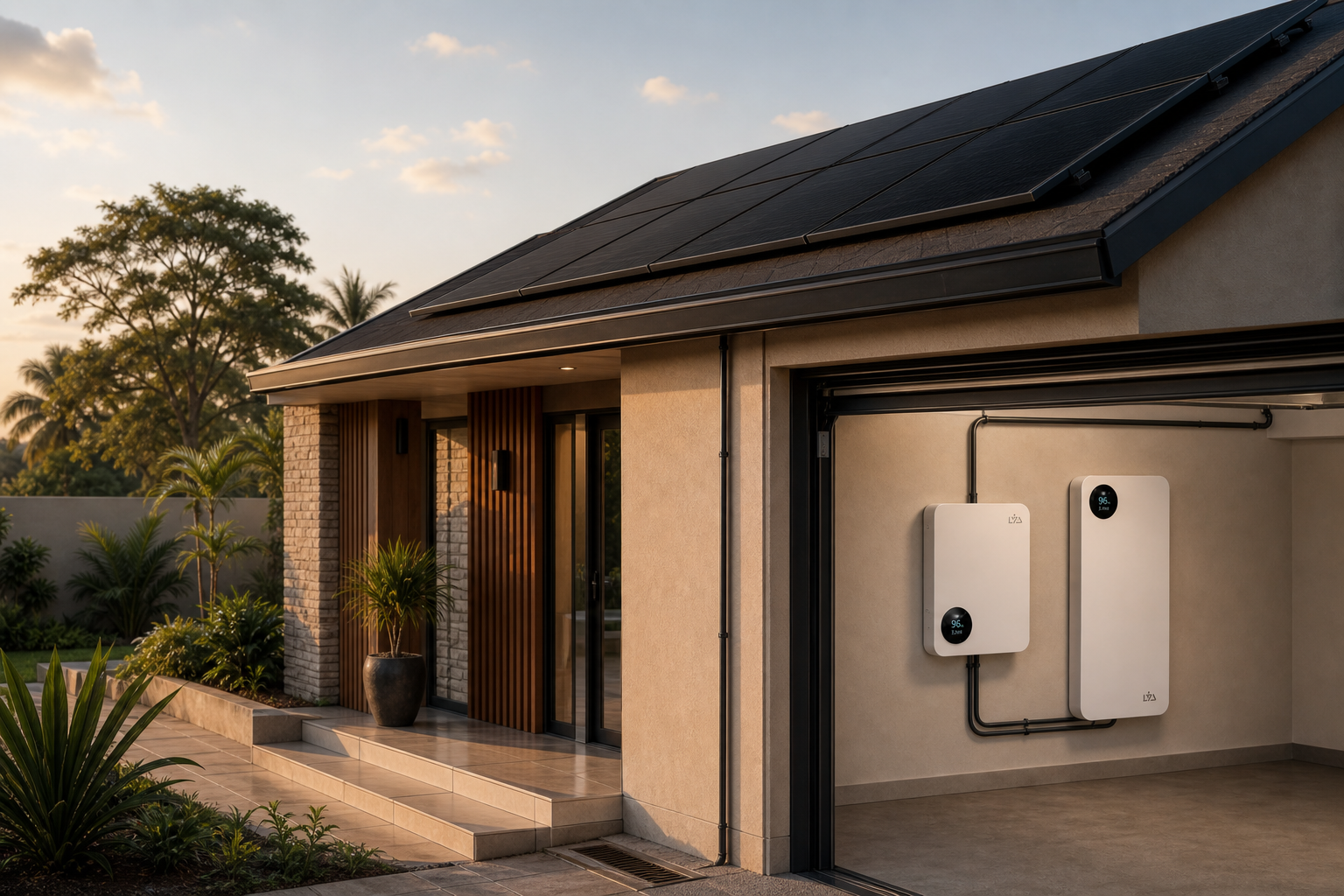
Photon catches the sun. Orbit decides what to do with it. SafeCell holds it for later. Three products engineered to speak the same language and ship as one coordinated system — designed at LYD, tuned to the same Lucid OS.

A modern African home with LYD Photon panels on the roof, an LYD Orbit inverter and SafeCell battery visible on the wall through the open garage
Step 01

Photon captures

Bifacial HJT modules convert direct, diffuse, and albedo light into DC current with up to 26.9 % efficiency. Heat hardly slows them down.

Step 02

Orbit decides

Three to six MPPT inputs accept Photon's output, decide whether to feed the home, charge SafeCell, or sell back to the grid — moment by moment.

Step 03

SafeCell stores

Surplus solar flows into SafeCell during the day; SafeCell carries the property after sunset. One wall, one system, one platform.

See the other two thirds of the system.

Lucid OS

Every panel, telemetered.

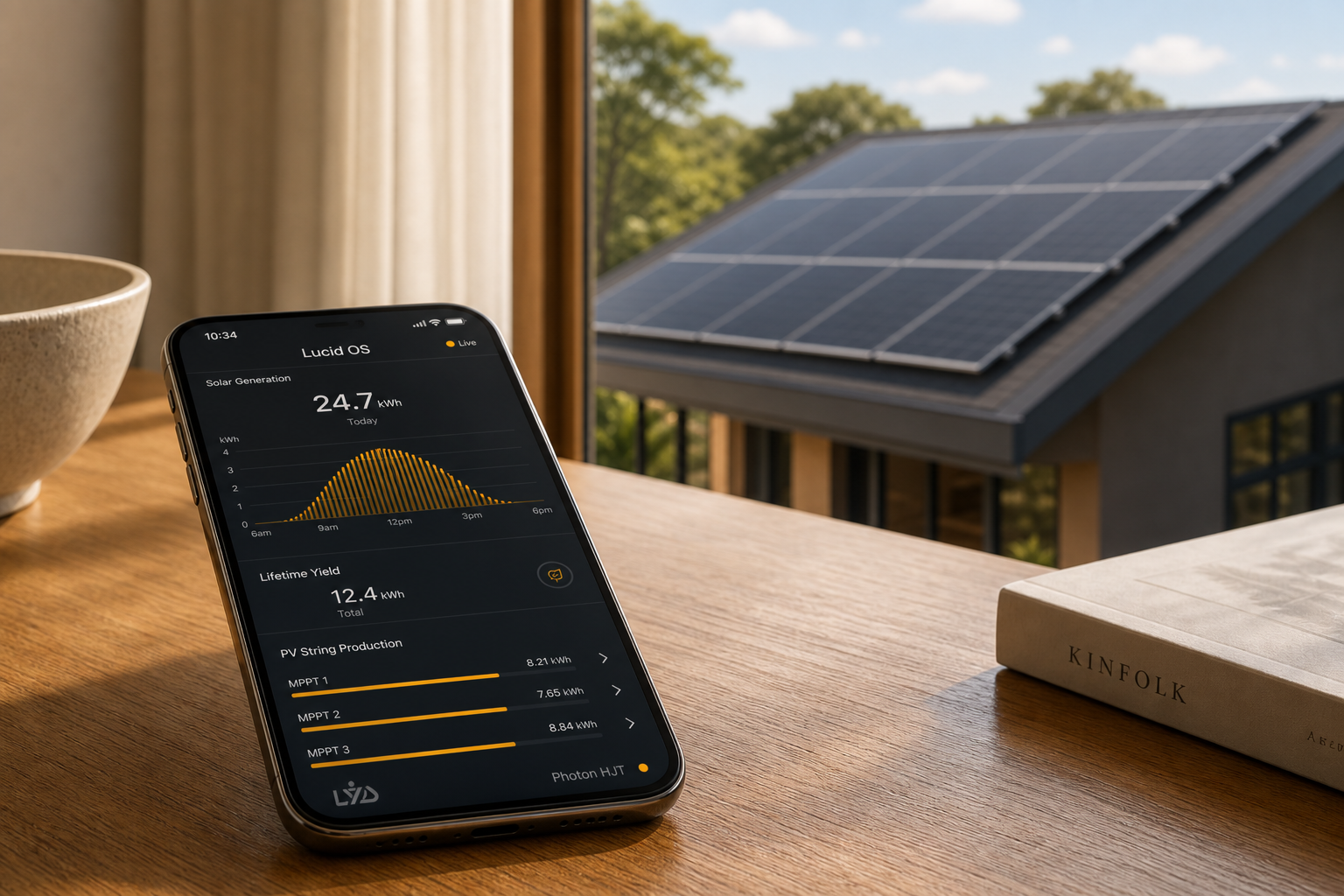
Through Orbit, every Photon string streams its current, voltage, and yield to Lucid OS. You see exactly how much energy the roof made today, the week, the year — and Lucid OS quietly flags the day a panel starts under- producing, long before it becomes a problem.

  • String-level visibility

    MPPT-by-MPPT readings, not just an array-wide total. Spot the dusty panel, the shaded corner, the wiring run that needs a recheck.

  • Yield reports that earn their keep

    Daily, monthly, and annual generation reports — exportable. For homeowners they're satisfying. For commercial sites they're the audit trail.

  • Predictive maintenance

    Lucid OS learns each Photon's seasonal curve. If a panel drifts off its expected output, the platform tells you before the next bill does.

Discover Lucid OS
Lucid OS dashboard on a smartphone showing solar generation telemetry from LYD Photon panels

Compare the lineup

Specs side by side.

Every Photon ships with the same HJT cells, the same bifacial back glass, and the same 30-year linear power warranty. The lines below show the dimensions that actually change between modules.

Spec

Photon 400

Residential

Photon 595

Light Commercial

Photon 650

Commercial

Photon 720

Utility

Nameplate power400 W595 W650 W720 W
Module efficiency26.9%25.4%24.8%24.3%
Cell count108 (half-cut)132 (half-cut)132 (half-cut)144 (half-cut)
Cell formatM6, 166 × 83 mmM10, 182 × 91 mmG12-R, 210 × 105 mmG12, 210 × 105 mm
Voltage (Vmp)41.2 V43.6 V45.8 V46.4 V
Current (Imp)9.71 A13.65 A14.20 A15.52 A
Open-circuit (Voc)49.6 V52.4 V54.9 V55.7 V
Short-circuit (Isc)10.34 A14.51 A15.05 A16.40 A
Best forResidentialLight CommercialCommercialUtility
Dimensions (L × W × D)1722 × 1134 × 30 mm2278 × 1134 × 30 mm2384 × 1134 × 35 mm2384 × 1303 × 35 mm
Weight21.5 kg28.5 kg32.8 kg36.4 kg
Cell technologyHeterojunction (HJT)Heterojunction (HJT)Heterojunction (HJT)Heterojunction (HJT)
BifacialYesYesYesYes
Power warranty30-year linear30-year linear30-year linear30-year linear

Swipe the table horizontally to see all SKUs.

Be first in line

Join the waitlist for early access to LYD products, exclusive pricing, and updates on our journey to power the clean energy future.

No spam, ever. We’ll only send meaningful product updates.